Data table on live Bubble data
Sorting, filtering and inline editing, deployed into Bubble as one native element.
No migration. No rewrite. Build individual features or entire pages while your data & workflows keep running in Bubble. Your agent writes the code. SumCode helps you understand, iterate & maintain it.
Get started for free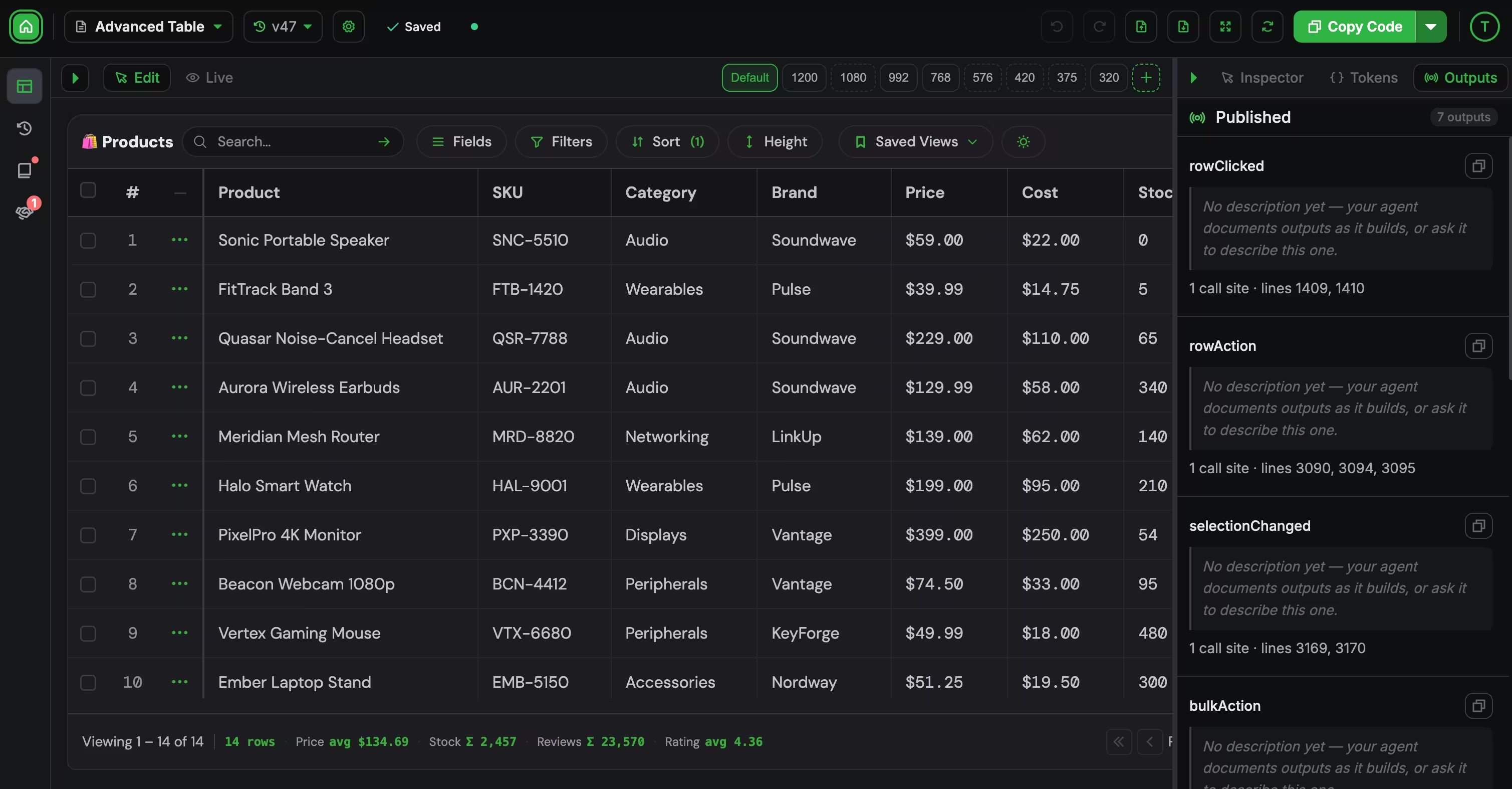
SumCode exposes every project over MCP. Your agent reads, writes, previews and versions your work directly. Claude, Codex, Cursor, Antigravity, VS Code, or anything that speaks MCP.
Build advanced U.I thats difficult to execute. Running inside Bubble on live data.
Sorting, filtering and inline editing, deployed into Bubble as one native element.
<div id="cc-data-teeth" hidden>
2[[teeth]] Search for Teeth:format as text
3[[marks]] Search for Marks:format as text
4</div>
One hidden element carries live data across the bridge. SumCode renders it as real code, and the build harness makes that code behave natively inside Bubble.
Your rebuilt feature reads live Bubble searches, not copies, and runs in your app as one native element through the free SumCode Connector.
Get started for free
SumCode syncs your Bubble app's JSON into every project: every page, element and data type, and how they fit together. Your agent builds against the real structure, so new work slots in instead of fighting what you already have.
Get started for freeA plain-English document of what your project does and how it works, updated as you build.
Every save is a version you can read, compare and restore in one click.
Every edit is attributed to a person or an agent, with a timestamp and a diff.
A full-featured data table: search, filters, sorting, pagination and inline editing, reading live rows from a Bubble data bridge.
Bubble DB → hidden data element → client-side render pipeline.
.toolbar { display: flex;
38− background: #ffffff;
38+ background: var(--surface);
39 border-radius: 12px; }
---
2colors:
3 primary: "#228B22"
4 primary-deep: "#1D771D"
5 ink: "#14180F"
6 canvas: "#FCFCFA"
7---
Your design system lives in SumCode. Fonts, colors and spacing become tokens every element uses, so each rebuilt piece matches the app you already have.
Having your U.I in code opens up so many possibilities and integrations that make your bubble app more powerful.
Rebuild a page as real HTML, CSS and JavaScript, then paste it back in as a native element. Your data, workflows and hosting never move.
Publish landing pages to Netlify so search engines can actually read them. Bubble keeps running your data and workflows.
Add an auth token and connect to real data from any backend, such as Supabase, Xano or Firebase. Every stays running & working in Bubble.
SumCode is an agent driven code editor that allows you to build frontend with code that works in Bubble. You start by connecting your AI agent via MCP, create a workspace and then tell your agent to build you the feature you want. The agent follows the instructions in the MCP to write the code and the instructions for how to connect it into Bubble. The agent will write real code that stays versioned, documented and consistent with your design system.
Yes! You can implement features built in SumCode in your existing app. The code can be linked up to existing workflows and databases. You can use it to rebuild old features or build new ones from scratch.
Nope! There is no need to leave Bubble. SumCode is optimised to work within the Bubble ecosystem. It is a way to leverage the speed & flexibility of A.I generated U.I without needed to leave the Bubble ecosystem.
Nothing. Your data, workflows and hosting stay in Bubble while you rebuild the frontend. Rebuilt elements read and write the same live data as the rest of your page, and Bubble keeps running your app.
The connector plugin is an optimised interfaced that allows you to connect your code into Bubble quicker & easier. It combines the power of the HTML element & the toolbox plugin into one element. It is the recommended way to connect your code into Bubble. It is however not mandatory. You can do the same thing with the HTML element + the toolbox plugin.
You just copy paste it in. SumCode writes plain HTML, CSS & Javascript. In the editor there is a copy button which you use to then paste the latest version of your code into the SumCode connector (or a HTML element if you chose to use that approach)
Nope. SumCode understands Bubble's rendering engine. Your agent gets access to a build harness knows how Bubble's responsive engine renders elements, so your code behaves like a native part of the page at every breakpoint.
Yes. SumCode's [[key]] token bridge pipes live Bubble fields into your custom code, so your elements react to the same data as the rest of your app and can publish values back out to your workflows using the outputs values. The logic for setting everythign up is documented in the token bridge tab & the outputs tab.
Bubble stays your backend, and for most builders it stays that way for good. Connecting something else, like Supabase or Xano, is a much later step that exists only if you ever need it. The same token bridge feeds your elements either way, so nothing about how you build changes.
No. Just a Claude or Codex subscription. Your A.I agent handles all the coding for you. Just tell it or show it want you want built and it will execute.
Any that speak MCP: Claude, Codex, Cursor, Antigravity, VS Code and more. They connect over MCP and read, write, preview and version your code directly.
It can. SumCode syncs your app's structure into the project: every page, element and data type, and how they fit together. Your agent builds with real context about the app it is extending, and your app's records never leave Bubble.
Every save is a version you can restore in one click, and agents checkpoint as they work. You can always roll back to an earlier point, so experimenting on a live element is never risky.
SumCode is free during early access. Paid plans will come later, and early users will get plenty of notice before anything changes.